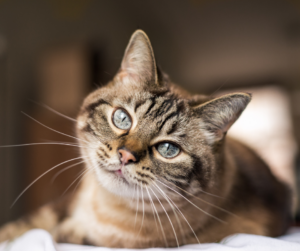
A Multnomah County jury just awarded over $800,000 in damages against Wild Coast Pet Foods after a Portland cat died following the consumption of their product. The case made national headlines. It didn’t have to go that way — and if you’re a manufacturer, this story has a message for you.
What Allegedly Happened in this Case:
The owner of a 4-year-old cat named Kira sued Wild Coast after the Oregon Department of Agriculture confirmed the cat tested positive for bird flu, which the owner linked to Wild Coast’s raw chicken product. After days of treatment at a veterinary hospital, Kira was euthanized. The jury awarded $7,951 in compensatory damages and — critically — $800,000 in punitive damages. Under Oregon law, juries can award up to ten times the compensatory amount. That’s how a pet’s veterinary bill becomes a national news story.
The lawsuit alleged Wild Coast failed to disclose that raw chicken sourced from California and Washington — states with the highest confirmed bird flu outbreak rates — carries elevated H5 exposure risk for cats. The manufacturer, represented by insurance company attorneys, did not mount a successful defense.
The Defense That Wasn’t Mounted
Here is what I know about how this type of litigation tends to play out — and what I’ve seen in similar cases I’ve been involved in.
Insurance company attorneys, through no fault of their own, are generalists. Their job is to manage risk and minimize costs, which in practice means settling. A thorough defense — one that examines full veterinary records, conducts proper epidemiological analysis, and challenges the scientific assumptions in the complaint — is time-consuming and expensive. The insurance company won’t fund it. So it doesn’t happen.
What often gets missed:
- Full medical records — In cases I’ve reviewed, complete records often reveal the animal had pre-existing health conditions. That context matters enormously to a jury’s view of causation and liability. (From what I’ve read of the transcripts, this wasn’t done.)
- Laboratory testing limitations — PCR testing detects viral DNA; it cannot confirm viability – whether or not the DNA is “alive” and can infect. FDA prohibited virus isolation for pet food surveillance in March 2025 (virus isolation can tell if the virus is “alive”). These are meaningful distinctions a generalist attorney is unlikely to know, let alone argue effectively. Whole Genome Sequencing is very specific and only valid to very specific DNA matches. (They are called SNPs – single nucleotide polymorphisms.) Did a scientist/expert evaluate how many SNPs of similarity existed? (In a similar case, the SNPs were close to suggest, but not close enough to prove causation. Did the lawyers know?)
- The epidemiology of bird flu in cats — Of 610 documented cases of bird flu in domestic cats in the U.S., only 5 are linked to raw food. Non-raw-fed cats have five times the infection rate of raw-fed cats. The dominant risk factor is environmental — outdoor access and contact with wild birds. Did the lawyers hire an epidemiologist to present true facts? The court transcripts do not indicate that happened.
- The most basic question — Did the cat go outside? What does the property look like? Do the owners feed birds? Are there water features, ponds, lakes or bird baths on the property? Were there any dead birds? Were bird feces on the property that the owner could have stepped in? Did anyone ask? Did the state epidemiologist actually walk the property? Environmental exposure — not diet — accounts for 99.9994% of bird flu risk in cats. These simple questions would reshape the causation argument entirely. All it takes is a qualified epidemiologist. It does not appear the attorneys hired one.
The Numbers Behind the Narrative
The bird flu and raw food narrative has been driven by fear, not statistics. Here is what the data actually show, based on USDA figures through August 2025:
| Group | Cases / population | Infection rate |
| Raw-fed cats | 5 of 3,500,000 | 0.00014% |
| Non-raw-fed cats | 605 of 82,500,000 | 0.00073% |
Relative risk: 0.19 — raw-fed cats had one-fifth the infection rate. Both Fisher’s Exact Test (p = 0.0000027) and Chi-Square Test (p = 0.000075) confirm this difference is statistically significant and not due to chance. Attributable risk from diet: 0.00059%. Meaning 99.9994% of bird flu risk in cats arises from other factors.
These are not numbers that support singling out raw food as a primary cause. A competent expert witness with epidemiological training would have presented this data in court. It may not have changed the outcome — but it would have changed the conversation.
What Next Gen PFMA Can Do for You
Membership in Next Gen PFMA is not just about regulatory guidance and recall notices. When a situation escalates — whether it’s a consumer complaint, a state investigation, or litigation — you need people in your corner who understand raw pet food, microbiology, federal law, and veterinary medicine. That’s what we’re here for.
Before you call the insurance company’s attorney, call us. We can:
- Review full veterinary records and identify whether prior health conditions create reasonable doubt about causation
- Explain the laboratory testing landscape — what PCR does and does not confirm, what testing options are and aren’t available to manufacturers
- Conduct proper epidemiological analysis to identify alternative risk factors — outdoor exposure, wild bird contact, concurrent medications, and more
- Serve as expert witnesses and help you find attorneys who specialize in food law and actually understand your industry
| A Note on Prevention
The best defense is a strong foundation. Regardless of bird flu risk, manufacturers should be sourcing from USDA-inspected suppliers, requesting negative avian influenza test documentation, and communicating transparently with customers about sourcing and safety practices. These habits reduce exposure — in court and in the market. |
The Bottom Line
The Wild Coast verdict is a painful reminder that in a litigious society, the truth doesn’t defend itself. The scientific and epidemiological case for raw pet food — when properly examined — is far stronger than the headlines suggest. But that case has to be made by people who know the science, and the case has to be made early.
If you are facing a consumer complaint or legal threat, please reach out to your trade association Next Gen PFMA before you accept a settlement. You have resources available to you. Use them.
Catherine Alinovi, DVM, MPH (Epidemiology)
Executive Director, Next Gen PFMA · [email protected] · 727-810-8961